

The business world is rarely stable. In addition to the challenges of the COVID-19 pandemic, business leaders must grapple with ongoing economic volatility, changing customer tastes, and a rapidly evolving technological landscape. However, leaders can mitigate these challenges by applying the principles of neuroscience and neuroleadership to promote resilience, creativity, and other factors that are critical for succeeding in an ever-changing post-pandemic world.
Neuroscience Revolution
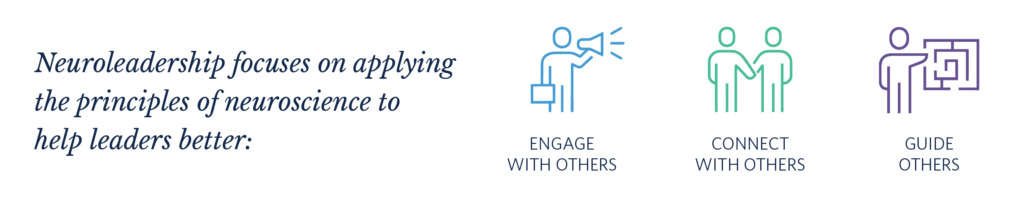
Neuroscience is rapidly yielding insights on better ways of working. For example, despite what many busy professionals would like to believe, the science is unequivocal: multitasking is ineffective. This and other research findings have important implications for neuroleadership, which focuses on applying the principles of neuroscience to helping leaders better engage, connect with, and guide others.
Neuroleadership: 5 Practical Applications
The pandemic forced us all to develop our leadership abilities in unexpected ways. Yet in a post-pandemic world, business leaders can further develop these skills by applying neuroleadership to five key organizational dimensions: resilience, creativity and innovation, relationship and network building, employee engagement, and virtual learning.
1. Resilience
Business leaders can encourage resilient thought patterns through mindfulness, exercise, and other emotional regulation techniques. Other neuroscience-based strategies include reframing threats as challenges and engaging in monotasking rather than unfocused multitasking.
2. Creativity and Innovation
Neural networks work best when they are freed from distractions such as email, phone calls, and the Internet. Studies also show that multitasking harms our ability to allocate our brains’ resources in ways that match our priorities.

3. Relationship and Network Building
Leaders can strengthen workplace relationships through management practices that promote the production of oxytocin, which is the neurotransmitter associated with increased trust. These include giving teams difficult but achievable jobs with a specific end and allowing employees discretion about how they perform their work.
4. Employee Engagement
Leaders in the talent management field can use neuroscience to improve employee engagement by educating other leaders in their organization on how to develop positive working relationships with their teams. Human resource and talent management leaders may want to re-evaluate 24/7 access to technology and other practices that can reduce focus.
5. Virtual Learning
Business leaders can increase the effectiveness of virtual learning by engaging the hippocampus, which is the brain structure associated with storing new memories. For example, the ideal virtual lesson should include breaks every 15 to 20 minutes. This will allow students to fully focus on the lesson when it resumes.
Scientific Leadership
Neuroscience can help business leaders adapt their workplaces to a rapidly-changing post-pandemic world. By applying practical techniques informed by an understanding of the emerging science of neuroleadership, leaders can sharpen their ability to motivate and guide others in ways that will strengthen workplace relationships and benefit the bottom line.
To learn more about the science of effective leadership, download our full white paper, The Neuroscience of Leadership. This resource provides an in-depth look at how you can use the principles of neuroscience to develop effective leadership strategies.