


Preparing high-potential talent for leadership success is one of the most strategic investments an organization can make. Yet the journey from individual contributor to effective leader is complex and varied. Each high potential brings a unique mix of personality, cognitive style, and experience that influences how they will lead and grow. To help these individuals thrive, organizational leaders must adopt a tailored leadership development approach that recognizes and builds on each person’s unique strengths while addressing relevant growth areas.
Define and Identify High Potentials
Before initiating development, organizations must first define what constitutes a high potential individual within their unique context. Generally, high potentials are employees who demonstrate the capacity and aspiration to lead successfully at higher levels. However, developing a more targeted definition aligned with the organization’s unique strategy, vision, and long-term goals will enable leaders to identify employees whose attributes and values best align with the organization’s strategic direction.
Tailor Development to Individual Strengths
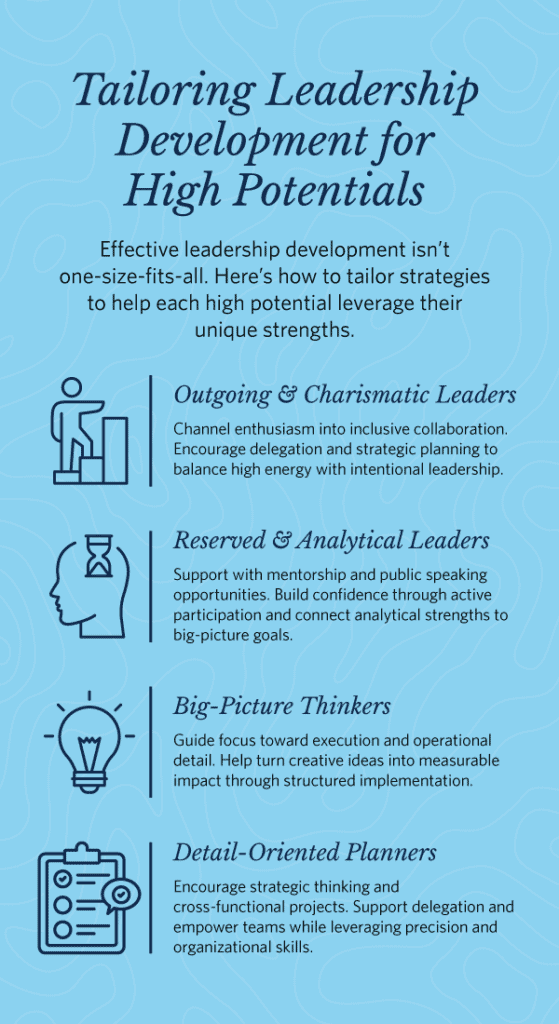
There is no single leadership profile. Some emerging leaders are naturally charismatic and thrive in high-energy environments, while others are introspective thinkers who lead through analysis and careful decision-making. The most effective development programs are tailored to individuals’ skills and challenges and will help each high potential leverage their inherent strengths and expand beyond their natural tendencies.
- Naturally outgoing leaders often benefit from coaching that channels their enthusiasm into inclusive collaboration. Organizations should balance their high energy with intentional leadership and planning by encouraging delegation and long-term strategic thinking.
- Reserved, thoughtful leaders excel when supported through mentorship and opportunities for public speaking and strategic decision-making. Organizations should help them build confidence by encouraging active participation in team discussions and guiding them to connect their analytical strengths to broader organizational goals.
- Big-picture thinkers often bring vision and creativity to leadership roles. Development programs should guide them to focus on execution, operational detail, and practical implementation to help them turn their big ideas into measurable impact.
- Detail-oriented leaders bring precision and structure. Their development pathways should encourage big-picture thinking and strategic planning by offering opportunities to lead cross-functional projects. Organizations should support them in delegating tasks and empowering team members while leveraging their naturally meticulous, organized, and process-focused tendencies.
Customize Learning for Sustained Growth
Because each high potential’s leadership journey is unique, organizations should create development plans that combine assessment, feedback sessions, and reflection. These elements help participants understand their current leadership style and identify specific areas for growth. Setting measurable goals and providing diverse, real-world learning opportunities ensures that development efforts will remain relevant and actionable.
An important element of this learning customization is partnership. In “How to Choose the Right Executive Education Partner: 4 Key Questions”, UNC Executive Development learning and development experts emphasize that the right executive education partner will listen closely to each organization’s unique needs, understand its challenges, and focus on sustained behavior change rather than simple knowledge transfer. This collaborative approach helps organizations design leadership programs that not only equip high potentials with new skills, but also integrate those skills into daily practice in their roles for long-term organizational success.
Building the Future of Leadership
Preparing high potentials for leadership roles requires a deliberate, individualized, and research-informed approach that connects personal development with organizational strategy. By identifying the unique attributes of future leaders, tailoring learning to their natural tendencies, and partnering with an executive education provider who prioritizes behavioral transformation and measurable outcomes, organizations can ensure that their next generation of leaders is ready to lead with confidence and aligned strategic vision.