


In today’s professional world, leadership continuity within organizations is essential, and effective succession planning and leadership development are crucial for long-term success.
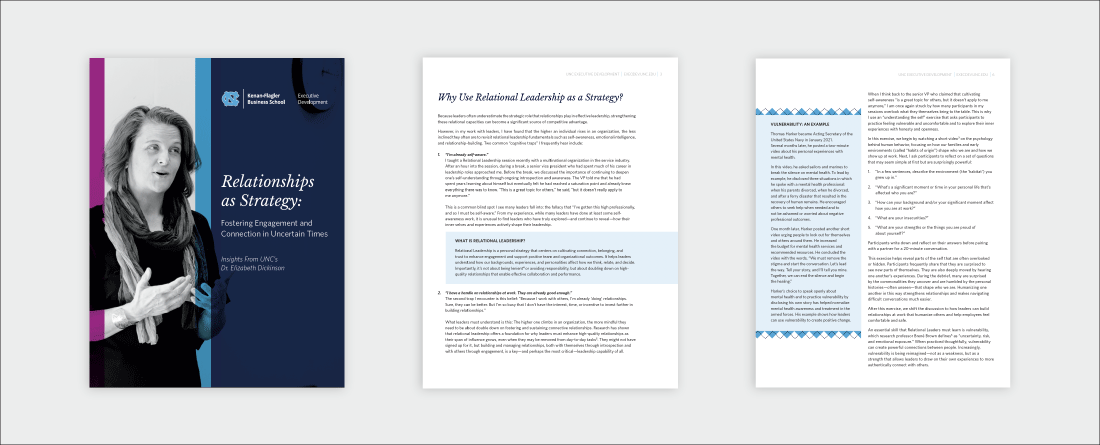
“Leadership is fundamentally about how one individual can motivate others to behave in ways that further the goals of the overall organization,” notes Professor Sekou Bermiss of UNC Kenan-Flagler Business School in this downloadable white paper on five steps for effective succession readiness.
To that end, many organizations invest heavily in leadership development and succession planning but struggle to determine whether these efforts are successful. Without meaningful metrics, even the most well-intentioned programs to develop high-potential talent can fall flat, leaving critical leadership roles unfilled. By identifying and tracking key performance indicators (KPIs), organizations can align leadership initiatives with long-term goals and ensure that investments deliver measurable value.
Why Measuring Leadership Development Matters
Succession planning is intended to help organizations sustain performance and agility as leaders transition in and out of key roles. When this process is poorly executed, however, those transitions can become a significant source of organizational risk. According to Harvard Business Review, weak leadership transitions are costly, while stronger development and succession practices can increase company value by 20–25 percent over time.
Leadership development is only as strong as the outcomes it produces. By tracking KPIs, organizations can evaluate progress, identify gaps, and make data-informed decisions that will drive continuous improvement and support leadership agility and strategic alignment across the enterprise.

Key Metrics that Signal Leadership Readiness
While every organization’s strategy will differ, certain KPI categories provide a strong foundation for evaluating leadership succession efforts.
1) Talent Pipeline Health
To understand leadership pipeline health, start by measuring how well the organization is positioned to fill critical leadership gaps as soon as they arise, often referred to as “bench strength.” Two essential indicators of this readiness include:
- Percentage of critical roles with ready successors: Reflects the organization’s preparedness to navigate specific leadership transitions without disruption. UNC Executive Development Program Manager Laura Butcher, who works closely with organizations on leadership development and succession planning, explains that “Some companies even go so far as to categorize successors as ‘Ready Now’—positioned for immediate succession—and ‘Ready Later’—succession ready in one to two years.” This approach provides additional clarity on how readiness is assessed.
- Bench strength by function or level: Outlines how many qualified successors exist across departments and leadership layers and can clarify where gaps might emerge.
Leaders can use these insights to strengthen development plans accordingly, turning potential blind spots into opportunities for proactive growth.
2) High-Potential Development and Retention
High-potential employees are the foundation of future leadership. Tracking the growth and retention of high potentials offers valuable insight into how well an organization is nurturing its top talent. Consider:
- Promotion rate of high potentials: Demonstrates the organization is successfully advancing emerging leaders.
- Retention rate of high potentials: Indicates engagement and satisfaction among the next generation of leaders.
- Development plan activation rate of high potentials: Measures the proportion of high-potential employees with development plans that are actively being executed.
If high potentials are leaving or not progressing, it may indicate development programs are not meeting their needs or that organizational culture or recognition structures need refinement.
3) Engagement and Buy-In Effectiveness
Effective development requires commitment across the organization and ongoing feedback to succeed. Engagement metrics help determine whether initiatives are resonating with participants and creating tangible results. Useful indicators include:
- Participation and completion rates: Provide insight into the reach and accessibility of leadership development initiatives.
- Post-program performance improvement: Measures the application of learning.
- Manager involvement in succession planning: Reflects how deeply leadership accountability is embedded in management practices.
- Employee feedback on development opportunities: Both qualitative and quantitative data are important; quantitative data helps identify patterns and trends, while qualitative feedback provides depth and context. When collected and analyzed together, both types of data offer actionable insights.
Collecting data from multiple perspectives, such as talent reviews, surveys, and 360-degree feedback, provides a comprehensive picture of impact and identifies areas for adjustment.
Using Data to Drive Continuous Improvement
Collecting data is only the first step. To make these metrics meaningful, organizations must review data trends regularly and adjust programs as needed. By embedding this review process into annual or quarterly planning cycles, organizations can create a culture of continuous improvement where leadership growth becomes an ongoing, measurable commitment linked to organizational success.
Succession planning is most effective when dynamically integrated into the organization’s strategic planning cycle where critical roles and succession candidates are regularly re-assessed with a forward-looking perspective.
Building a Culture of Measurable Leadership
Succession planning and leadership development initiatives succeed when they are intentional, data-informed, and aligned with strategic goals. By tracking the right KPIs and measuring what matters, organizations can be confident that their efforts will develop leaders who are ready for their next role and to drive the organization forward.