

Many leaders can recall a familiar scene: sitting in a meeting that does not need to happen, where attention drifts, energy fades, and progress feels slow. Ineffective and unnecessary meetings quickly crowd calendars, leaving little space for focused work, let alone strategic thinking or meaningful collaboration. Over time, this pattern creates a “meeting flood” culture, where time feels constrained and decision-making and innovation become harder. Unfortunately, many leaders fail to see this as a problem that can, and should, be addressed.
The good news is that the length of meetings and the culture surrounding them can be changed. Organizations can reduce meetings and redesign collaboration in ways that strengthen alignment, deepen engagement, and accelerate results.
This case study highlights how one organization transformed its meeting culture—saving an extraordinary three hours per employee each day—and became more efficient, effective, and strategically focused. Their experience shows that when leaders bring intention and clarity to how they gather as a team, meetings become a source of momentum rather than a barrier.
The Challenge: Meeting Culture in Organizations
A large public-sector technology agency faced an all-too-common problem: “Too many meetings with too little impact.” This meeting flood had existed in the organization for years, but, like many organizations, it surged during the COVID-19 pandemic and continued long afterward, with no end in sight.
Staff reported frustration as senior leaders overloaded calendars with meetings, dominated conversations, answered their own questions, and rarely sought input from attendees. As a result, fatigue rose, decision-making slowed, and collaboration was scattered. Meetings were too frequent, too long, and often included the wrong mix of attendees. Staff frequently sat through demotivating discussions that repeated information instead of advancing it, while operational tasks overshadowed relationships, innovation, and strategic focus.
At the heart of the issue was the lack of a shared framework for how meetings supported the agency’s mission. Leaders wanted to move to a meeting culture that empowered attendees, encouraged accountability, and improved communication flow. They recognized that something was driving the demotivation, low participation, and reluctance to collaborate, but they had a blind spot around the root causes.
Fortunately, these leaders were committed to improving both organizational efficiency and team relationships. They recognized the need for a system that could balance strategic and operational work to ensure the right people were in the right conversations.
This presented a wonderful opportunity for a partnership with UNC Executive Development.
The Intervention: How UNC Executive Development Enabled Change
UNC Executive Development collaborated with the government agency to improve how its senior leaders communicated. As the team explored the challenges behind the agency’s dysfunctional meeting culture, a customized solution began to take shape. What emerged was a program designed to meet leaders where they were and deliver meaningful, hands-on learning.
Fifty federal senior executives and senior leaders divided into two cohorts participated in a custom, co-designed leadership development experience. UNC Executive Development faculty and staff traveled to agency facilities across two states to deliver two highly interactive, three‑hour, in‑person sessions for each cohort.
The program was led by Dr. Elizabeth Dickinson, a Relational Leadership specialist whose work bridges research and real‑world practice. Government & Defense Sector Program Director Amy Parker joined one of the sessions to support the participants and enrich the learning experience.
At the heart of the program was a deep exploration of the overwhelming volume of meetings leaders faced, the often‑unclear purpose behind them, and the behavioral dynamics in play. Participants examined how meeting structures influence decision‑making and identified practical ways to create more intentional, efficient, and productive interactions.
Through a blend of research‑based insights, hands-on exercises, and peer discussions, Dr. Dickinson guided the participants in recognizing patterns within their own meeting cultures. Participants were encouraged to experiment with new approaches, challenge long‑standing habits, and walk away with strategies they could immediately apply to streamline collaboration and enhance organizational impact.
One research-based insight especially resonated with participants: the importance of creating what psychologists call “communal behavior” within organizations, meaning behavior grounded in cooperation and mutual support. When leaders intentionally create supportive, trusting relationships, they strengthen the culture around them. However, when leaders focus almost exclusively on tasks and not enough on relationships, they can unintentionally undermine how people connect and collaborate.
During the sessions, leaders had an epiphany: The agency’s dysfunctional meeting culture was creating intense overwork and fatigue, making it difficult to form or strengthen supportive, trusting relationships and communal behavior. This lack of connection made it difficult for teams to function in a healthy way. Leaders also recognized that until they addressed the volume of meetings, they would not be able to repair the agency’s culture. A turning point came during the session when the most senior executive openly acknowledged that there were simply too many meetings, and that needed to change. This powerful admission signaled to everyone that leadership was aware of the problem and, most importantly, ready to act.
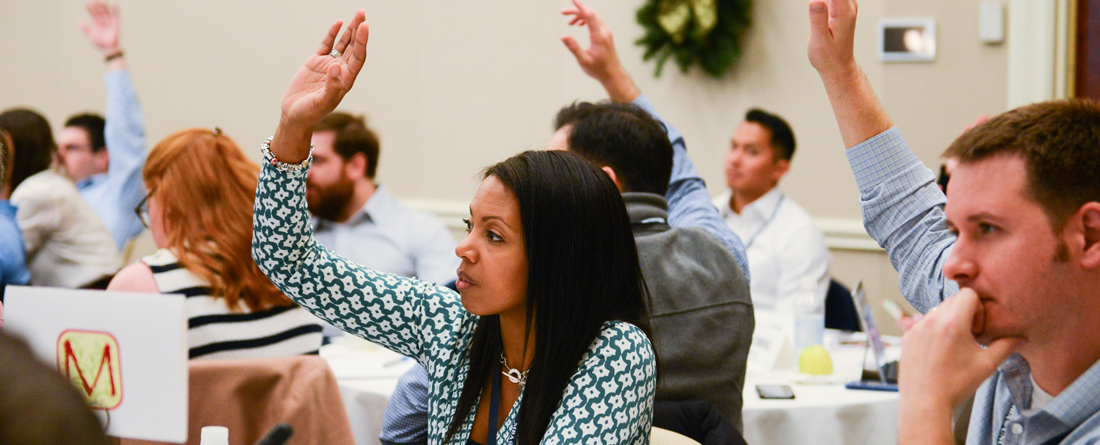
Throughout the sessions, applied exercises and peer discussions accelerated learning, reflection, and behavior change. For example, Dr. Dickinson conducted an exercise where only one-quarter of the group was asked to speak while others only listened. In the group that was asked to speak, Dr. Dickinson assigned several roles, including a “challenger” role, where participants were asked to offer a constructive challenge to something that was said. Assigning roles is a great way to tease out perspectives that often go unsaid, and the discussion exercise allowed people to participate who rarely do.
The discussion centered around how participants truly felt about meetings: What was their general experience? What are their own meeting and connection challenges? How have meetings changed after COVID-19? The conversation highlighted that employees reported feeling demotivated by the excessive number of meetings. This exercise then sparked a series of honest and open conversations about what was not working and how the current culture was impacting everyone in the agency.
The program equipped leaders with a clear, practical approach for designing meetings that would reflect organizational priorities and strengthen alignment between strategy and day-to-day operations. As they applied these tools, leaders also strengthened workplace relationships and reignited a sense of motivation among their teams.
The Outcomes: What Changed for the Organization
The program was an overwhelming success. In an anonymous evaluation administered by UNC Executive Development, participants rated the sessions a perfect score of 5.0 out of 5.0. Participants reported that they left both sessions feeling empowered. They not only understood the agency’s challenges more clearly, but, most importantly, they felt equipped to drive meaningful change.
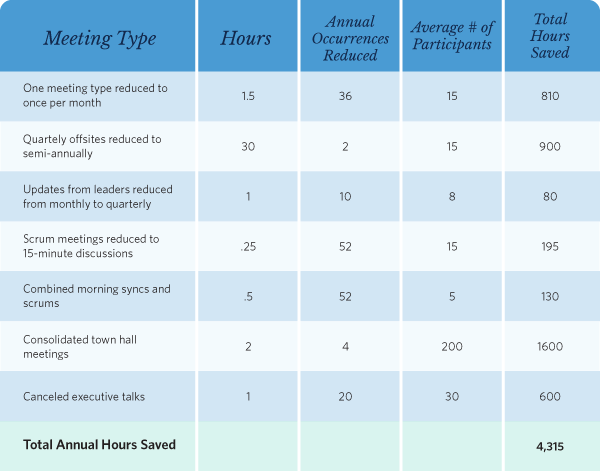
Epiphanies are important, but action is also necessary for change. UNC Executive Development continued partnering with the agency after the program concluded to help leaders put their new commitments into action. Following the sessions, they jointly redesigned the agency’s meeting portfolio and introduced clear expectations for how leaders should prepare for, participate in, and follow up after meetings. To reduce the meeting flood, the team eliminated or combined unnecessary recurring meetings, reduced the frequency of quarterly sessions, and streamlined large-group forums. These changes resulted in an extraordinary time savings of 4,315 hours a year, freeing up three hours per employee each day.
The highest senior executive summarized these improvements by saying, “We have aligned the staff to attend the correct meetings to allow for strategic vision changes from above and operational risks from the directors to harmonize operations.”
Leaders shared that the new structure freed up meaningful time for focused work, stronger communal behavior, and strategic planning. It also allowed leaders to take greater ownership of operational decisions. Staff began attending only the meetings that aligned with their responsibilities, which reduced fatigue and confusion and improved communication flow.
Leaders also reported stronger coordination between strategic goals and daily operations and a clearer sense of how decisions moved through the organization.
Four Effective Meeting Strategies to Implement
When a house floods, the first step is to stop the water—not start mopping. The same principle applies to meeting culture. As the leaders discovered in the sessions, before new structures or behaviors could take hold, the organization needed to reduce the sheer volume of meetings that were overwhelming calendars and draining attention. This insight became a turning point during the UNC Executive Development team’s conversations with the client.
Dr. Dickinson introduced four effective strategies for leading more engaging and productive meetings. These approaches helped shift the organization toward a more efficient, innovative culture that values purposeful engagement and gives leaders the time and mental space they need to think, plan, and lead at a higher level.
Once leaders stopped the meeting flood, they could finally see patterns more clearly, reset expectations with intention, and make room for the strategic work that their roles demand.
These four strategies reflect the actions this organization used to regain control of its time and reshape the way leaders think, collaborate, and make decisions:
- Consolidate and simplify the meeting portfolio. Leaders reviewed all recurring meetings and evaluated their purpose, frequency, and attendees. Some meetings were merged, while others were shortened, replaced with written updates, or simply canceled. This allowed leaders to focus their time on the conversations that genuinely required collaboration. Leaders were also encouraged to build intentional breaks into meeting schedules to help prevent burnout, such as encouraging self-care and shortening one-hour meetings to 52 minutes. Leaders also began modeling behavior, such as saying, “As a reminder, we are ending this virtual meeting eight minutes early. I encourage you to step away from your computer and do something else. I plan on grabbing a snack, and I hope you do, too.”
- Align leadership roles with meeting responsibilities. Executives stepped back from operational discussions and concentrated on long-range planning. Other leaders stepped into a stronger role in operational meetings and were empowered to address risks and make decisions more quickly. This created clearer division of responsibilities and greater momentum across teams.
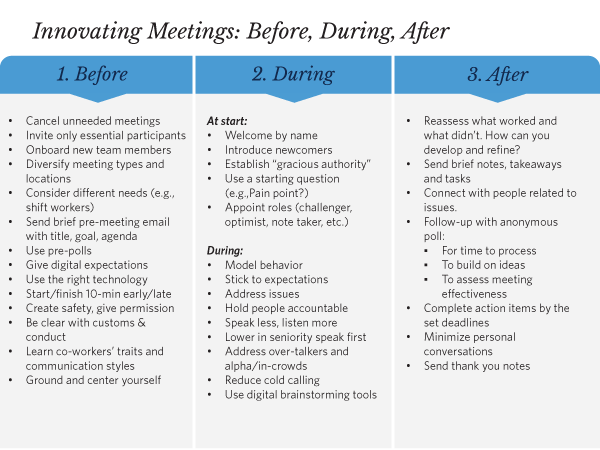
- Introduce a “before, during, and after” strategy to meeting design. Dr. Dickinson introduced participants to a simple process for designing meetings that leads to more effective outcomes. Before meetings, leaders should clarify the purpose and decisions needed. During meetings, facilitators should foster focused discussion and ensure balanced participation. After meetings, they should assign clear follow-up actions. This approach reduces repetitive conversations and strengthens both efficiency and accountability.
- Develop communication behaviors that support trust and engagement. Leaders practiced techniques for surfacing risks, asking thoughtful questions, and exploring different perspectives. These behaviors created a climate where people felt comfortable speaking up. As a result, meetings became more productive spaces for building relationships and solving problems, rather than just routine updates.
Lessons for Leaders on Stopping the Flood and Holding Better Meetings
When meetings are intentional and purpose-driven, they build trust, strengthen collaboration, and advance organizational strategy. Otherwise, they drain energy and distract from what matters most.
This government agency’s experience demonstrates that meaningful change becomes possible when leaderships rethink how people gather to communicate and make decisions. By reducing unnecessary meetings, clarifying roles, and adopting a consistent meeting‑design approach, the agency reclaimed over 4,000 hours annually, giving employees space to focus on higher‑value work.
As these operational improvements took hold, the organization also experienced a powerful cultural transformation. Leaders embraced new communication behaviors, deepened trust, and strengthened the supportive relationships that help teams thrive. Motivation increased, and staff gained insight into how decisions flowed through the organization.
With the right structure, shared accountability, and a commitment to intentional leadership, meetings can shift from being a drain on organizational energy to a powerful driver of performance. Redesigning how people meet is ultimately about redesigning how they work, relate, and make progress together. This agency’s transformation demonstrates that reinventing how teams come together is a strategic opportunity to unlock greater clarity, connection, and collective success.