

Uncertainty has become a defining feature of leadership. Economic swings, geopolitical tensions, rapid technological change, and evolving workforce expectations continue to reshape how organizations operate. In times like these, many leaders fall back on a familiar instinct: wait and see.
That instinct is understandable. When clarity feels scarce, pausing can feel like the responsible choice. Yet in today’s environment, inaction carries risk. Delayed decisions can slow momentum, widen competitive gaps, and leave teams unclear about where to focus.
It is worth remembering, however, that uncertainty can reveal new opportunities by motivating teams to refine their priorities, strengthen coordination, and make progress on what matters most.
Uncertainty Is Here to Stay
In today’s organizational environment, uncertainty is not a temporary disruption that leaders can wait out. Indicators such as real economic uncertainty, inflation uncertainty, economic policy uncertainty, trade policy uncertainty, and geopolitical risk reached their highest levels in decades beginning in 2019. This persistent elevation demonstrates that uncertainty has become a structural feature of the operating environment rather than a short‑term anomaly.
The economic effects of this sustained uncertainty are well documented. Research on business cycles shows that high uncertainty suppresses industrial output and slows broader economic activity by depressing investment, consumption, and labor participation. This means leaders are often making decisions in conditions where economic momentum is already constrained.
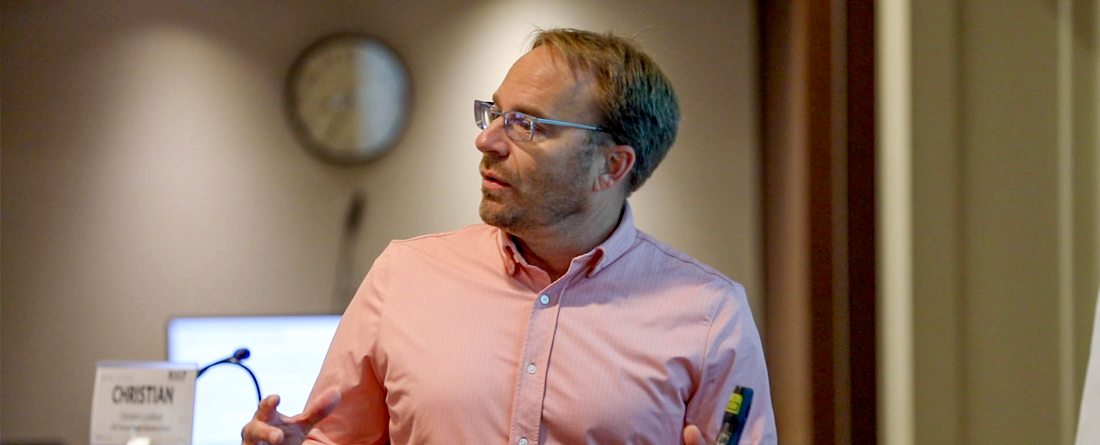
Within this environment, inaction is not neutral. When uncertainty increases, managers often delay profitable investments and slow technology adoption, which reduces scale efficiency and hinders productivity growth. Additional findings show that “waiting and seeing” can generate significant economic consequences by postponing or canceling projects that would otherwise produce meaningful returns. As Christian Lundblad—a leading finance scholar and professor at UNC Kenan-Flagler Business School—explains, inaction itself carries strategic risk. In his words, “Inaction and paralysis are forms of risk-taking. And they are the least strategic forms of risk-taking.”
Why Waiting Is Risky When Competitors Keep Moving
Just as leaders sometimes fall into the trap of believing that uncertainty will eventually settle if they simply wait it out, there is a second, equally risky assumption: that competitors are waiting, too. This belief can create a false sense of safety, as though inaction is a collective pause rather than an individual choice.
In reality, the competitive landscape rarely stands still. Even when conditions are ambiguous, organizations continue to test new ideas, refine their strategies, and invest in capabilities they believe will matter next. Across industries and sectors, innovation does not stop just because the future is unclear.
Leaders who wait for certainty often confuse caution with control, overlooking the risks introduced by delay itself. Markets evolve, technologies advance, and customer expectations shift regardless of whether an organization feels ready to respond. The belief that clarity will eventually arrive can create a false sense of control, but that moment of complete certainty rarely comes. Instead, organizations drift into decision paralysis while conditions continue to change around them.
Research underscores how consequential this dynamic can be. One study of more than 1,200 organizational leaders found that slow decision-making can erode up to 5% of annual revenue through missed opportunities and execution delays. The risk is not only falling behind, but failing to notice it is happening until the gap is difficult to close.
Recognizing that competitors are not waiting for perfect clarity reframes the leadership challenge. The question is no longer how to minimize risk by delaying action, but how to move thoughtfully and deliberately despite ambiguity. Because major strategic decisions are often made without complete information, the organizations that move forward despite uncertain conditions are the ones that will shape the future instead of merely reacting to it.
Building Organizational Discipline in Uncertain Environments
Managing uncertainty requires creating the conditions that allow organizations to respond thoughtfully and decisively as new information emerges. For organizations across the public, private, and nonprofit sectors, this responsibility most often sits with senior leaders, department heads, and cross-functional leadership teams who set direction and establish decision norms for others to follow.
1. Shift from Waiting for Certainty to Acting With Discipline
The work begins by clarifying what decisions can be made with the information currently available. Senior leaders can define thresholds for action, outlining what level of risk is acceptable and what signals would warrant a course correction. Department leaders and team managers can then operate within those guardrails, making timely decisions and reporting back on results. This shifts the focus from waiting for certainty to acting with discipline and adjusting as new information emerges.
2. Use Alignment to Turn Uncertainty Into Purposeful Action
Fostering strategic alignment is also crucial. Aligned organizations experience less friction and hesitation because priorities are clear and authority is understood. Teams are not left second-guessing direction or seeking constant approval. Instead, they are empowered to make decisions that support shared goals.
Creating strategic alignment begins with a few disciplined practices: clarifying two or three enterprise priorities, defining decision rights at each level of leadership, and communicating how trade-offs will be evaluated when conditions shift. Regular leadership forums that reinforce these priorities and test them against emerging challenges can further strengthen consistency and accountability.
Rather than eliminating risk, strategic alignment helps organizations manage it. It clarifies intent and accountability to transform uncertainty from a source of paralysis into a catalyst for intentional, meaningful action.
3. Create Psychological Safety to Surface Emerging Risks
Fostering genuine psychological safety is essential for helping organizations spot risks before they escalate. When people feel comfortable voicing concerns, unconventional ideas, or low-probability risks, organizations are better equipped to anticipate emerging challenges. As Christian explains, “[We must] use the data we have to try to have fruitful conversations about risks. We also need to have a culture where we feel comfortable having conversations where we raise ‘weird’ scenarios.”
Recent history offers many reminders of why this matters. When a major shipping vessel blocked the Suez Canal in 2021, global trade routes were disrupted for days—an event few organizations had seriously anticipated, yet one that rapidly affected supply chains, costs, and customer expectations. Organizations with strong strategic alignment adapted most effectively. They could interpret the disruption quickly, coordinate decisions across functions, and adjust plans with clarity and confidence.
Managing uncertainty, then, is about equipping leaders at every level with the clarity, structure, and support needed to make informed decisions, make thoughtful adjustments, and move the organization forward.
Reframing Action as a Strategic Imperative
Uncertainty increases the need for effective leadership. When conditions are unclear, organizations still require direction, decisions, and movement.
Effective leaders do not wait for certainty before acting. Instead, they focus on strategic alignment so decisions can be made consistently across the organization. Clear priorities and shared understanding reduce hesitation and allow teams to respond as conditions change.
Even when it feels like restraint, inaction is a decision with real risks. Its consequences often emerge gradually, but they are no less real. Leaders who invest in alignment create the structure needed to act deliberately in uncertain environments, rather than allowing uncertainty to dictate the organization’s pace and direction.