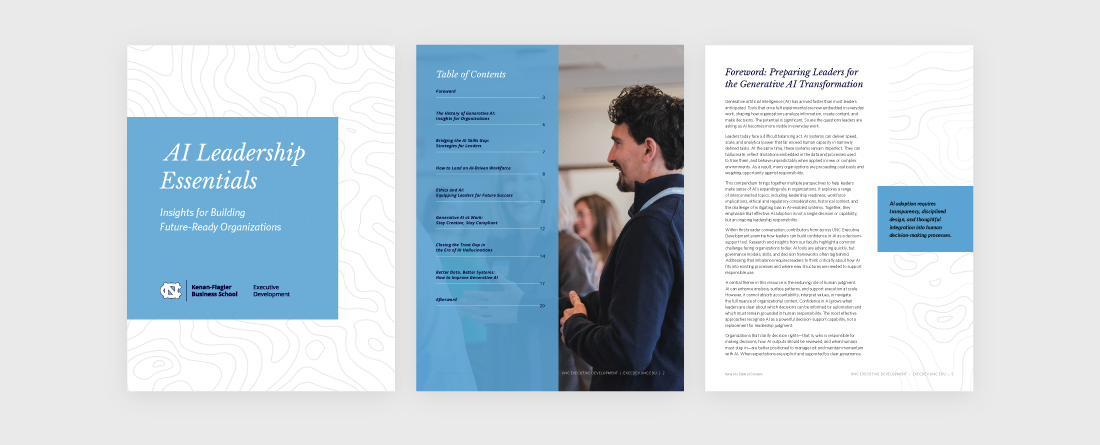



Artificial intelligence (AI) is no longer on the horizon; it is here, influencing how organizations operate and compete. From analyzing data to supporting strategic planning, AI provides speed and data that leaders can leverage across industries. Yet with this opportunity comes a central challenge: determining when AI should guide decisions and when human oversight must remain in control.
In this article, we will examine the expanding role of AI in leadership and decision-making, including where AI adds value, where human judgment is irreplaceable, and how leaders can create governance models that balance efficiency with accountability.
The Expanding Role of AI in Leadership
In the age of AI, leadership is defined by new possibilities. AI systems can analyze large volumes of data, identify patterns invisible to the human eye, and deliver predictive insights that improve agility. Leaders who integrate AI effectively into organizational processes gain the ability to forecast demand more accurately, allocate resources more efficiently, and drive consistency across global operations.
Many organizations recognize this potential and are committing significant resources to it. In fact, 90% of companies are using or considering using AI. The scale of these commitments signals that organizations see AI as central to leadership and strategy, not just as an operational tool.
AI-driven decision-making is especially valuable for repetitive or data-intensive processes. These include demand forecasting, fraud detection, scheduling, and operational reporting. When applied correctly, AI enables leaders to redirect their attention toward higher-level priorities, such as strategy, innovation, and talent development.
However, as organizations expand their use of AI into increasingly critical decisions, the need for strong governance becomes paramount. “The needs for oversight and guardrails increase as the decisions become more important,” explains Professor Adam Mersereau of UNC Kenan-Flagler Business School, an expert in data-driven dynamic optimization, revenue and supply chain analytics, and decision-making frameworks for AI deployment and trust. “And oversight of AI becomes more challenging for decisions made at large scale.”
The Risks of Over-Reliance on AI in Organizations
The benefits of AI come with significant risks. Algorithms may carry bias that creates unfair outcomes. Similarly, a lack of transparency in decision-making can erode trust among employees and stakeholders.
“One of the factors holding back the implementation of AI is lack of trust, driven by lack of transparency into how AI systems produce their results.” Adam observes. “An effective way to build trust in AI implementations is to ensure that humans are integrated into decision processes to review outputs, handle special cases, construct guardrails, and take accountability.”
Another risk lies in the gap between investment and execution. Although many organizations are investing in AI, only 13% of companies are fully prepared to deploy it. This means that many systems are still experimental, siloed, or insufficiently embedded in workflows. Leaders who treat AI as fully capable before their organizations are ready may expose themselves to missteps and missed opportunities.
For certain types of decisions, these risks are amplified. Hiring practices, compliance decisions, and crisis response cannot be left entirely to automated systems. These and other critical situations require judgment informed by ethics, empathy, and a thorough understanding of the context.
While AI in leadership provides scale and speed, it cannot replace the distinctly human qualities that drive trust and long-term organizational resilience.
When to Let AI Decide and When Leaders Should Take Control
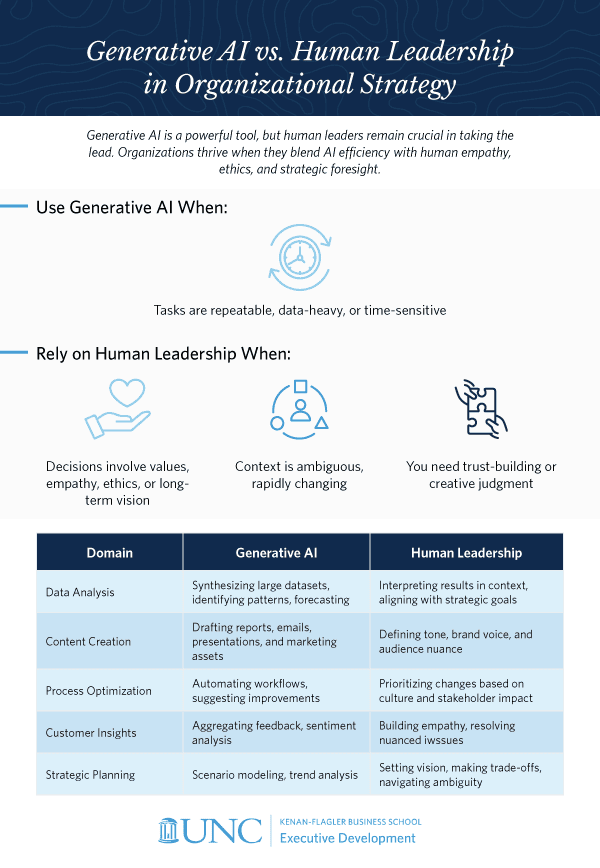
Executives need a structured way to determine where AI should be applied and where human oversight must remain central. As Adam reminds us, “One area where human judgment remains essential is in identifying and framing processes where AI can have its most positive impact. The flip side of this coin is figuring out which decisions are essentially human and should remain with human decision makers.”
A practical way to bridge this decision-making gap is to categorize decisions based on risk, complexity, and ethical weight.
Where AI Excels
AI performs best in low-risk, high-volume, pattern-based decisions where efficiency and precision matter more than context or nuance. Tasks such as data entry, trend recognition, and predictive analytics benefit from automation because they rely on speed, consistency, and the ability to process massive amounts of data. These functions free up leaders to focus on higher-level strategic thinking, while AI ensures operational scalability.
Even in these scenarios, leaders must define parameters. Without guardrails, automation can amplify small errors into systemic issues. Establishing clear thresholds for intervention, such as anomaly-detection triggers or accuracy-variance limits, prevents AI from becoming a source of unchecked decision-making.
Where Human Judgement Is Crucial
High-stakes or ethically complex decisions demand a distinctly human lens. Scenarios involving regulatory compliance, crisis management, or organizational restructuring call for empathy, cultural intelligence, and moral reasoning, which AI is not capable of. These are moments when leaders must interpret not just what is happening, but why it matters.
In these situations, leadership is about accountability and trust. Employees, customers, and stakeholders look to executives to uphold values, not just outcomes. AI can inform these decisions with data-driven insights, but the final call should rest with humans who can weigh consequences beyond numerical impact.
Building a Culture of Responsible AI Leadership
The successful integration of AI requires a culture that fosters accountability, transparency, and the ethical application of these tools. Leaders should begin by investing in training programs that build AI literacy across teams. This enables individuals to understand both the capabilities and limitations of AI.
Cross-functional collaboration is essential. Technology, operations, and compliance leaders must work together to ensure that AI aligns with their strategic goals. Clear governance frameworks help define roles, escalation paths, and accountability measures. Feedback loops should also be built into every AI system so that outcomes can be monitored, errors corrected, and strategies adjusted over time. These strategies enable AI to support leadership without undermining human responsibility.
The Future of Leadership in an AI-Driven World
As AI continues to shape decision-making, the role of human leadership becomes even more critical. Technology can provide data at scale, but it cannot interpret values, deliver empathy, or apply ethical reasoning. The future of leadership in an AI-driven world will depend on striking the right balance: allowing AI to handle repetitive, data-intensive tasks while ensuring leaders remain accountable for decisions that shape organizational culture and direction.